

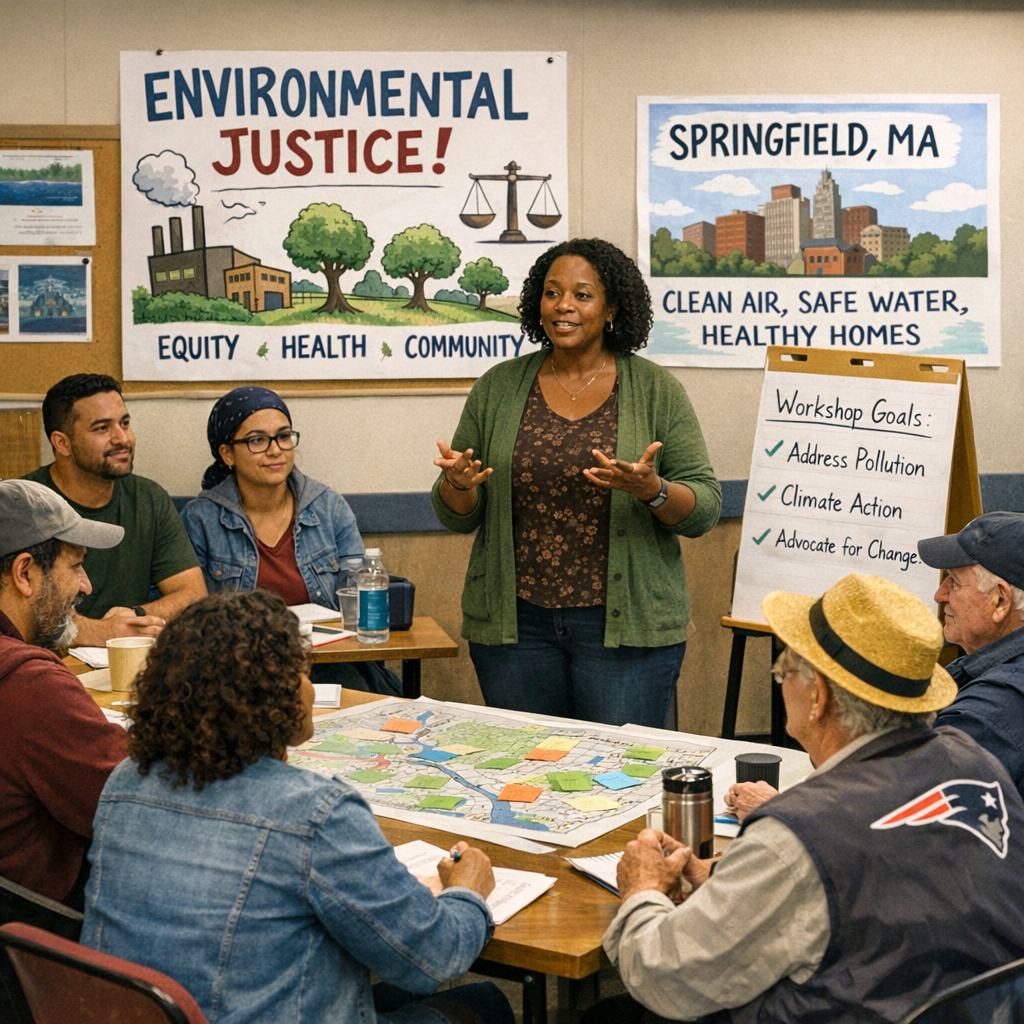
Springfield, Massachusetts, is actively addressing climate change and environmental justice through various community-driven initiatives and strategic planning efforts.
Community Initiatives
The Springfield Climate Justice Coalition (SCJC), established in 2014, unites over 55 diverse organizations, including community groups, faith-based institutions, and businesses. The coalition focuses on creating a healthier and more equitable Springfield by advocating for environmental sustainability and resilience. Notable achievements include securing a commitment to repair over 500 gas leaks in the city and promoting the adoption of a comprehensive Climate Action and Resiliency Plan.
Another significant effort is the Live Well Springfield Climate Change, Health, and Equity Initiative. Launched in 2019, this initiative addresses the interconnected issues of greenhouse gas emissions, health, equity, and systemic racism. The initiative’s goals encompass supporting the adoption of Community Choice Energy, updating the Springfield Climate Action & Resilience Plan, and preparing for extreme heat events.
Environmental Justice Efforts
Arise for Social Justice’s Environmental Justice Committee, active since 2009, focuses on improving air quality, reducing pollution, and advocating for stronger environmental policies. The committee’s work is particularly vital in Springfield, which has faced challenges related to air quality and high rates of respiratory illnesses.
Climate Change Risks
Springfield faces significant climate change risks, including extreme precipitation and heat. Projections indicate an increase in days with temperatures exceeding 91.3ºF, from about 7 days in 1990 to approximately 34 days by 2050. Additionally, about 20% of buildings in Springfield are at risk of flooding, with an average 41% chance of experiencing a flood about 1.9 feet deep over 30 years.
City Initiatives
The City of Springfield has implemented several initiatives to enhance climate resilience. The Brownfields Redevelopment Program focuses on assessing and cleaning up contaminated sites to promote economic development and environmental health. Successful projects include the transformation of former industrial sites into facilities like the Wellspring Harvest Greenhouse and the Springfield Smith & Wesson Industrial Park.
Furthermore, the city has adopted organic fertilization practices for its athletic fields to protect water quality and reduce pollution. This program has eliminated the need for pesticides, contributing to the health of local waterways and the Connecticut River.
Through these collaborative efforts, Springfield continues to make strides in building a resilient and environmentally just community.